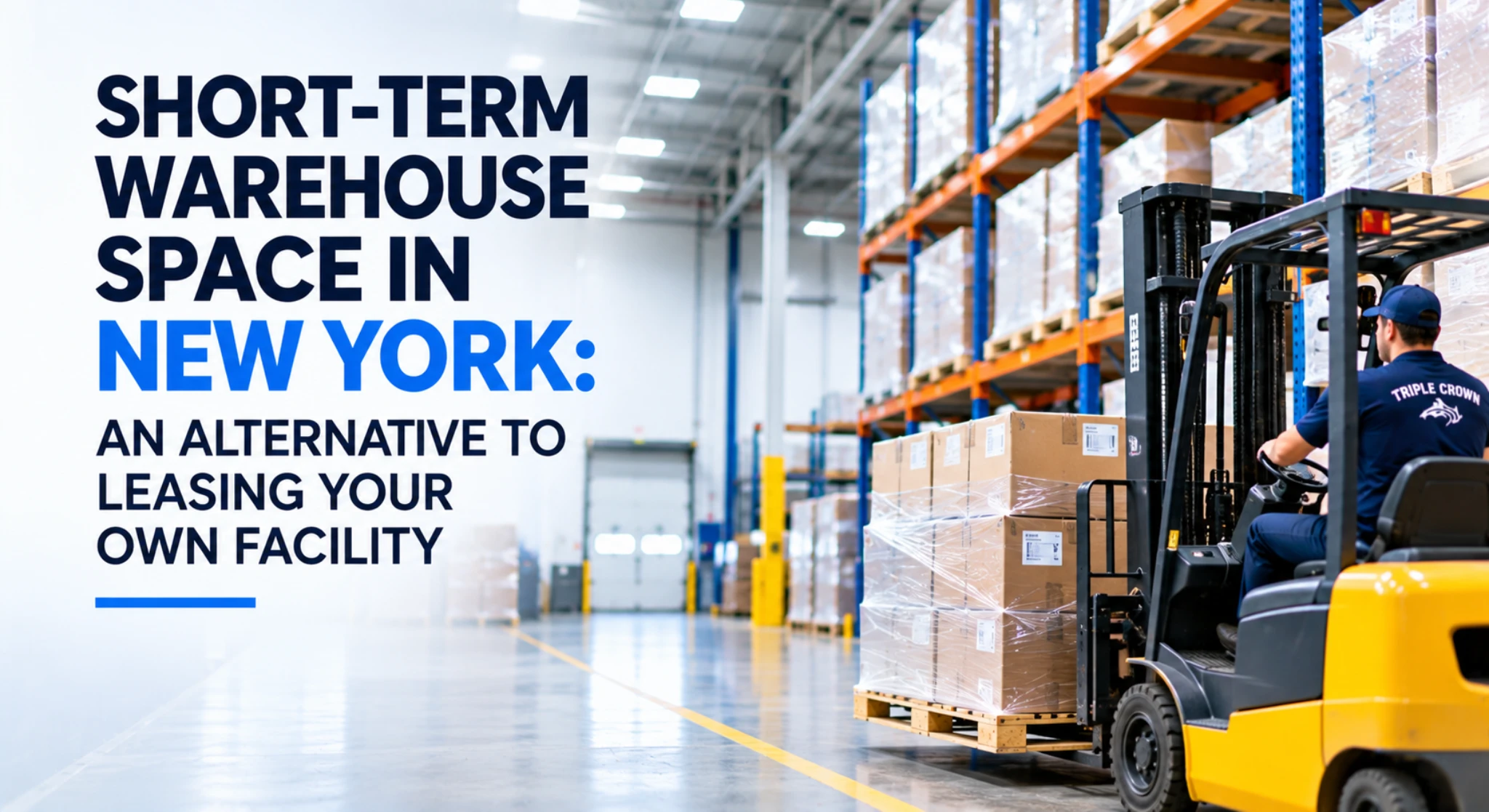
Not every business that needs additional warehouse space needs another warehouse lease.
A company may have a temporary increase in inventory, a new contract requiring additional storage, or a shipment arriving before its existing facility has enough room.
In these situations, signing a long-term commercial lease may create more expense and responsibility than the business actually needs.
For companies looking for short-term warehouse space in New York, using an established warehousing provider may offer a more practical alternative.
Why Businesses Look for Short-Term Warehouse Space
Warehouse requirements can change quickly.
A business may have enough room for normal operations but suddenly need additional capacity because of a large purchase order, supplier shipment, or unexpected increase in inventory.
Common reasons businesses look for short-term storage include:
- Inventory arriving ahead of schedule
- Large customer orders requiring additional stock
- Temporary increases in purchasing volume
- New contracts creating additional storage needs
- Limited space at an existing facility
- Delays in opening a new warehouse
- Testing demand before committing to permanent expansion
The important question is whether the additional storage requirement is temporary or likely to become permanent.
That distinction should guide the decision.
Short-Term Warehousing vs. Leasing Your Own Warehouse
Businesses generally have two options when they need additional warehouse capacity: use space through an existing warehousing provider or lease a separate facility.
Both approaches can work, but they involve different responsibilities.
Short-Term Warehousing Through a Provider
With an outside warehousing provider, the business pays for an agreed storage arrangement rather than operating an entire facility.
Depending on the agreement, the provider may handle receiving, storage, and coordination of outbound shipments.
This can be useful when storage needs are limited in duration or fluctuate over time.
Leasing a Warehouse
Leasing a dedicated warehouse gives the business greater direct control over the space.
However, the company may also need to manage:
- Lease commitments
- Utilities
- Insurance requirements
- Warehouse equipment
- Staffing
- Security arrangements
- Inventory handling
- Facility maintenance
A dedicated lease may make sense when storage requirements are large, predictable, and ongoing.
For temporary needs, those commitments may be difficult to justify.
1. Avoid Committing to More Space Than You Need
One of the biggest risks of leasing additional warehouse space is committing to capacity that may not be necessary later.
A business may need extra storage for three months but find itself responsible for a much longer lease.
Even if inventory returns to normal, the lease obligation may continue.
Using a warehouse provider can allow businesses to explore storage arrangements that better match the expected duration of their requirements.
Before making a decision, confirm minimum storage periods, pricing, availability, and termination terms.
2. Respond to Unexpected Inventory Increases
Inventory doesn’t always grow gradually.
A large shipment, supplier promotion, or unexpected customer order may create an immediate storage problem.
Businesses may need space before they have time to search for commercial real estate, negotiate a lease, or prepare a new facility.
An established warehouse provider may be able to accommodate suitable inventory when capacity is available.
However, businesses should confirm the provider’s available space, product restrictions, and receiving requirements before arranging delivery.
3. Keep Your Existing Facility Operational
When inventory exceeds available space, businesses sometimes begin using areas that weren’t intended for storage.
Products may accumulate in work areas, receiving zones, or other operational spaces.
This can interfere with normal activity and create unnecessary handling.
Moving appropriate excess inventory into outside storage can help keep the primary facility organized.
For manufacturers, this can be especially relevant when raw materials or finished goods begin occupying production areas.
4. Consider the Full Cost of Additional Warehouse Space
Monthly rent is only one part of operating a separate warehouse.
Businesses should also consider the costs of:
- Moving inventory into the facility
- Receiving and unloading shipments
- Storage equipment
- Warehouse labor
- Utilities and maintenance
- Insurance
- Inventory tracking
- Transportation between locations
Outside warehousing has its own costs, including storage, handling, and transportation fees.
The right comparison is the total cost of each option, not simply the advertised monthly rate.
A business should request a detailed explanation of charges before choosing a provider.
5. Understand What Is Included in the Storage Agreement
Not every short-term warehouse arrangement includes the same services.
Some providers charge separately for receiving, pallet handling, inventory access, order preparation, and outbound transportation.
Before committing, businesses should clarify:
- Minimum storage duration
- Storage pricing structure
- Receiving charges
- Handling fees
- Inventory access procedures
- Outbound shipment requirements
- Insurance responsibilities
- Notice periods
- Additional service charges
Understanding these terms helps businesses avoid unexpected costs and operational problems.
6. Match the Warehouse to Your Inventory
Not every warehouse can accommodate every product.
Storage requirements depend on the type, size, weight, packaging, and handling needs of the inventory.
For example, businesses should determine whether their products require:
- Pallet storage
- Floor storage
- Specialized handling equipment
- Temperature-sensitive conditions
- Additional security measures
- Specific loading or unloading capabilities
These requirements should be discussed with the provider before inventory arrives.
Businesses storing primarily palletized goods may also find our guide to pallet storage in New York and New Jersey useful.
7. Plan How Inventory Will Leave the Warehouse
Businesses sometimes focus entirely on finding storage space without planning how products will move out later.
Before selecting a warehouse, consider:
- Who will arrange outbound transportation?
- How much notice is required?
- Will inventory leave in one shipment or several?
- Are products going to customers or another business facility?
- Will the provider coordinate commercial delivery?
- What handling charges apply when inventory leaves?
Planning the outbound process early can prevent delays when the storage period ends.
When Is a Dedicated Warehouse Lease the Better Choice?
Short-term warehousing isn’t always the best solution.
A dedicated lease may make more sense when a company needs substantial space for several years, requires highly specialized equipment, or wants complete operational control over warehouse staffing and processes.
Businesses should compare both options based on expected inventory volume, duration, handling requirements, transportation costs, and long-term growth plans.
The most economical option depends on the actual operation.
How Triple Crown Warehouse Can Help
Triple Crown Warehouse provides commercial warehousing, storage, and logistics services from its Long Island location, supporting businesses in New York and New Jersey.
Companies evaluating additional warehouse capacity can discuss their inventory requirements, expected storage duration, and transportation needs with our team.
Storage availability, minimum commitments, handling arrangements, and pricing should be confirmed for each project.
Whether a business needs additional space for a temporary inventory increase or is evaluating outside warehousing as an alternative to operating another facility, the first step is understanding the requirements.
Final Thought
Needing additional warehouse space doesn’t automatically mean a business should sign another lease.
For temporary or changing inventory requirements, outside warehousing may provide a practical alternative to operating a separate facility.
Before making a decision, compare the full costs, contract terms, storage capabilities, and transportation arrangements.
The right solution should match how much space the business needs, how long it needs it, and how inventory will move through the operation.
Need Additional Warehouse Space in New York?
Speak with our team about your commercial storage requirements, expected inventory volume, and warehousing options.