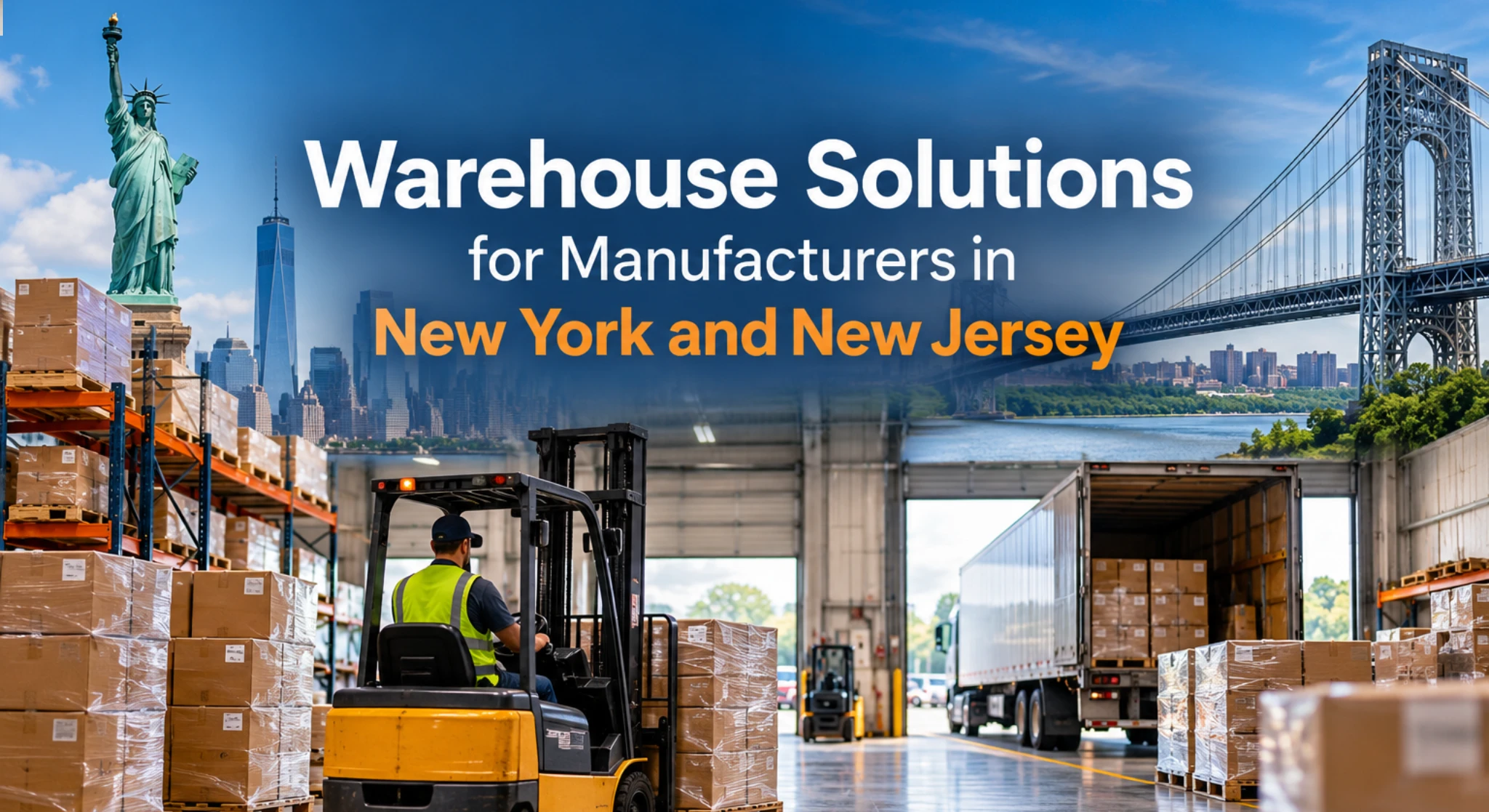
Manufacturers don’t always need more production space. Sometimes they simply need a better place to manage everything surrounding production.
Raw materials may arrive before they’re needed. Finished goods may need to be stored before customers are ready to receive them. Large orders can create temporary inventory increases, while limited facility space can interfere with production.
For manufacturers operating in New York and New Jersey, outside warehousing can provide additional capacity without forcing production space to become storage space.
Why Manufacturers Need Warehousing Beyond Their Production Facility
Manufacturing facilities are designed to make products.
When too much space becomes dedicated to storing materials or finished goods, the operation can become crowded and inefficient.
Outside warehouse capacity can help separate production from storage while giving businesses more flexibility over how inventory moves through the operation.
Manufacturers may use warehouse space for:
- Raw materials
- Components
- Packaging supplies
- Finished goods
- Palletized inventory
- Customer orders awaiting delivery
- Excess inventory during production increases
The right setup depends on where inventory is creating pressure in the manufacturing process.
1. Keep Production Space Focused on Production
Every square foot used for excess inventory is space that cannot be used for equipment, employees, workflow, or production.
As manufacturers grow, it’s common for materials and finished goods to gradually occupy areas that were never intended for long-term storage.
Moving appropriate inventory to an outside warehouse can free up operational space without requiring the company to immediately expand its manufacturing facility.
2. Store Raw Materials Until Production Needs Them
Manufacturers often purchase materials in quantities that don’t match immediate production requirements.
Larger orders may provide purchasing advantages or help protect against supply disruptions, but those materials still need somewhere to go.
Warehouse storage allows materials to be received and held until the production facility is ready for them.
Instead of filling the manufacturing floor with future inventory, materials can be transferred according to the production schedule.
3. Create Space for Finished Goods
Production and customer demand don’t always happen at exactly the same pace.
Products may be completed before customers, distributors, retailers, or project locations are ready to receive them.
That creates a need for finished-goods storage.
A warehouse can provide a staging point between production and final delivery:
Production → Warehouse → Customer
This allows manufacturers to continue producing without requiring every completed order to remain inside the production facility.
4. Handle Large Customer Orders More Efficiently
Large orders can temporarily change a manufacturer’s storage requirements.
A customer may purchase significant quantities but request delivery in phases rather than all at once.
Instead of keeping the entire order inside the manufacturing facility, finished goods can be stored and released according to the customer’s schedule.
This can help manufacturers maintain production capacity while still accommodating larger contracts.
5. Manage Inventory During Demand Fluctuations
Manufacturing inventory rarely remains perfectly consistent.
Demand can increase because of:
- Large customer contracts
- Seasonal purchasing
- New product launches
- Production runs
- Supply-chain planning
- Customer scheduling changes
Flexible warehouse capacity can help manufacturers absorb these changes without permanently expanding their own facility every time inventory increases.
6. Coordinate Storage With Commercial Delivery
Eventually, stored products need to move.
Manufacturers may need finished goods delivered to:
- Distributors
- Retailers
- Commercial customers
- Other facilities
- Project locations
When warehousing and transportation are coordinated, products can move from storage directly into the delivery process.
Businesses evaluating this part of their operation can also review what to look for in commercial delivery services in New York and New Jersey.
7. Use Pallet Storage Without Operating Another Facility
Manufacturers with palletized raw materials or finished goods may not need to lease an additional warehouse simply because inventory has increased.
Flexible pallet storage can provide additional capacity while allowing the manufacturer to keep its primary facility focused on production.
This can be particularly useful when inventory volume changes throughout the year.
When Does Outside Warehousing Make Sense for a Manufacturer?
Outside warehousing may be worth considering when:
- Inventory is interfering with production space
- Finished goods are waiting too long for delivery
- Materials are arriving before they’re needed
- Large customer orders require additional capacity
- Inventory levels fluctuate significantly
- The business is considering leasing additional warehouse space
- Staff are spending too much time managing storage and transportation
The goal isn’t necessarily to outsource everything.
It is to identify which inventory and logistics functions don’t need to occupy valuable manufacturing resources.
What Should Manufacturers Look for in a Warehouse Partner?
Manufacturers should evaluate a provider based on how well it fits their actual inventory flow.
Important questions include:
- What types of inventory can you store?
- Can storage capacity change as our requirements change?
- How is inventory received and tracked?
- How do we request products for pickup or delivery?
- Can you accommodate palletized inventory?
- Do you provide commercial delivery?
- What areas do you serve?
- Who will our team communicate with?
A warehouse provider should help simplify inventory movement rather than introduce another operational bottleneck.
How Triple Crown Warehouse Supports Manufacturers
Triple Crown Warehouse provides warehousing, pallet storage, commercial delivery, and logistics support for businesses throughout New York and New Jersey.
Manufacturers can use warehouse capacity for raw materials, finished goods, excess inventory, and products awaiting distribution based on their operational requirements.
When transportation is also needed, stored inventory can be coordinated for commercial delivery as part of the broader logistics process.
Final Thought
Manufacturing space is valuable.
Using too much of it for inventory can limit production capacity and make operations harder to manage.
For manufacturers that need additional storage without operating another facility, outside warehousing can create a practical buffer between purchasing, production, and customer delivery.
The right solution should give the business more room to manufacture while keeping inventory available when it’s needed.
Need Additional Warehouse Capacity for Your Manufacturing Operation?
Speak with our team about warehousing, pallet storage, and commercial delivery solutions for manufacturers in New York and New Jersey.