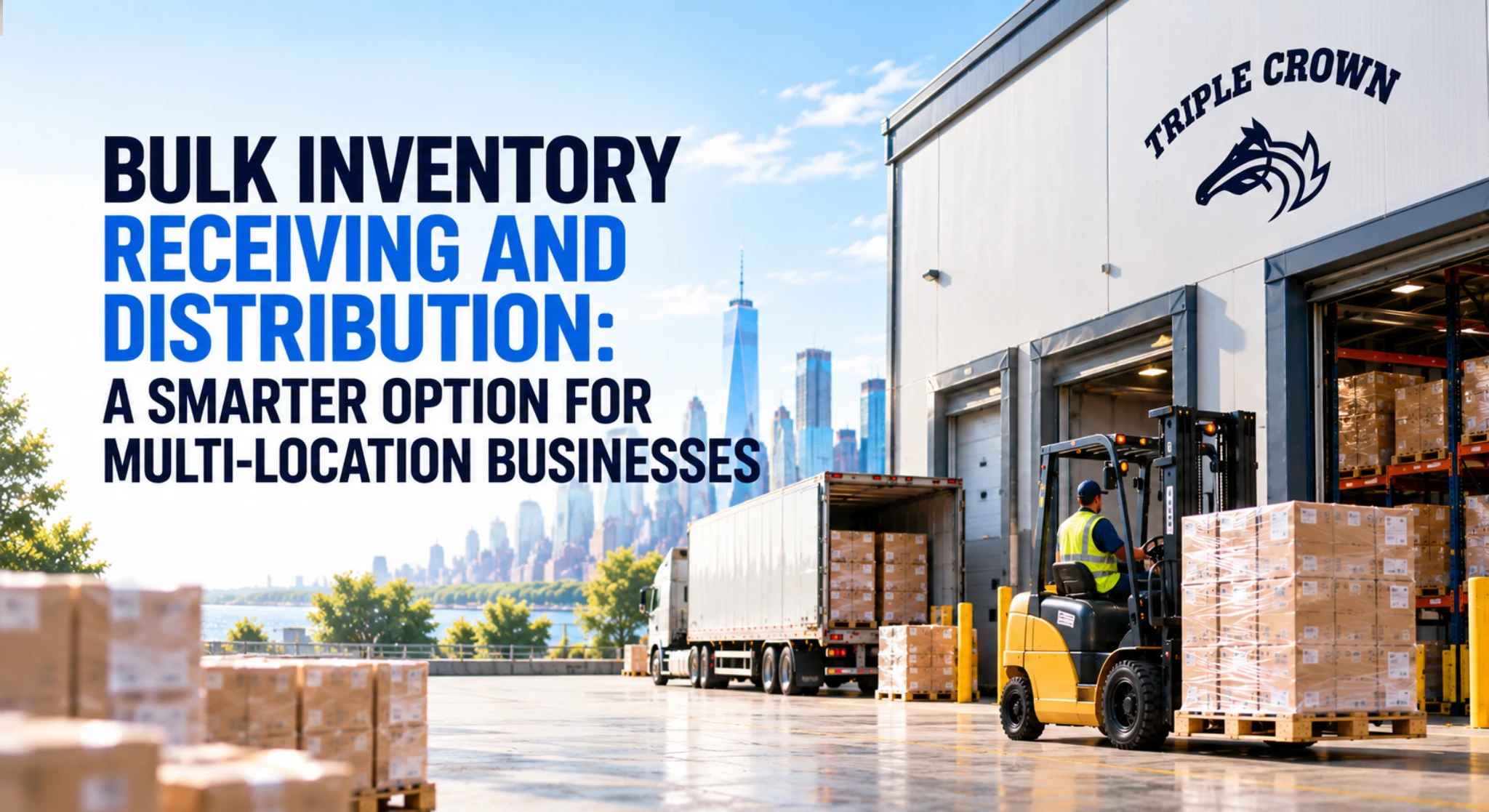
Buying and shipping inventory in larger quantities can make sense for growing businesses.
But when one large shipment needs to reach multiple stores, offices, facilities, or customer locations, the logistics can quickly become complicated.
Where will the shipment be received? Who will separate the inventory? How long will products need to be stored? And how will individual shipments reach each destination?
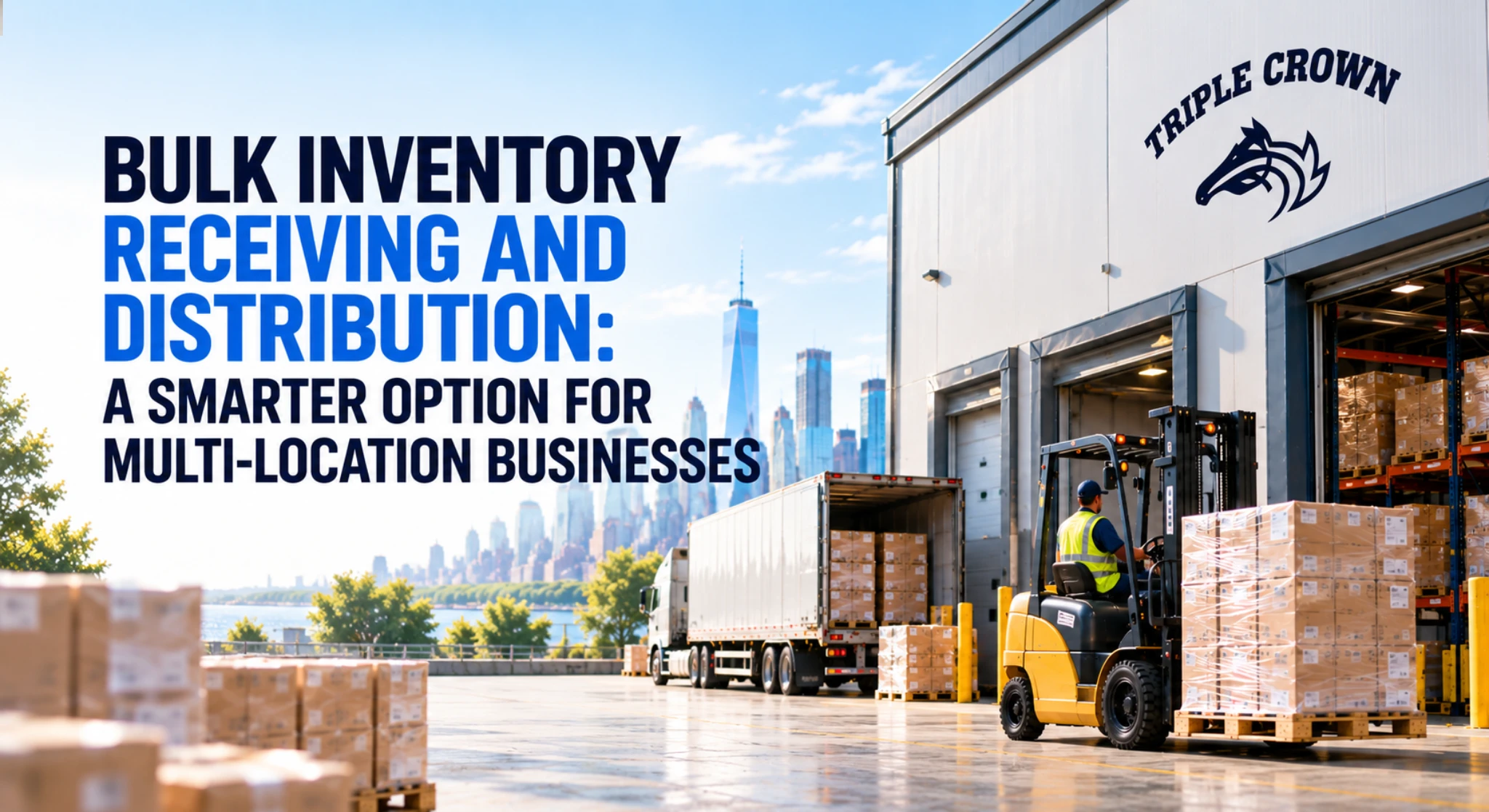
For businesses operating across New York and New Jersey, using a warehouse as a central receiving and distribution point can simplify the process.
Instead of sending every supplier shipment directly to multiple locations, inventory can arrive at one warehouse, be stored or staged, and then move out according to each location’s needs.
The Problem With Shipping Everything Directly to Individual Locations
Direct shipping can work when order volume is small.
As a business grows, however, individual locations may begin receiving separate shipments from multiple suppliers.
That can create problems such as:
- Too many deliveries
- Limited receiving space
- Inventory arriving before it’s needed
- Different delivery schedules
- Products being stored in operational areas
- Staff spending time coordinating shipments
Retail stores, offices, commercial facilities, and other business locations are not always designed to function as warehouses.
Centralizing inventory can help separate receiving and storage from day-to-day operations.
How Centralized Warehouse Receiving Works
The concept is straightforward.
Rather than having suppliers deliver separately to every business location, larger shipments can be sent to a central warehouse.
From there, inventory can be:
- Received
- Organized
- Stored when necessary
- Staged for individual destinations
- Delivered according to schedule
The warehouse effectively becomes the connection point between suppliers and the locations that ultimately need the products.
1. Receive Larger Shipments in One Location
Managing one larger inbound shipment can be easier than coordinating several smaller shipments across multiple locations.
This can be particularly useful when products arrive:
- By pallet
- In bulk quantities
- From multiple suppliers
- Before individual locations need them
The warehouse provides a designated receiving location without requiring stores, offices, or other facilities to absorb the entire shipment.
2. Store Inventory Until Each Location Needs It
Not every destination needs inventory at the same time.
One location may need products immediately, while another may not need them for several weeks.
Sending everything at once can create storage problems at the destination.
Warehousing allows inventory to remain centralized until individual locations are ready to receive it.
Businesses receiving primarily palletized shipments can also use pallet storage to manage inventory without operating another warehouse.
3. Separate Inventory for Multiple Destinations
A bulk shipment may contain products intended for several locations.
Instead of sending the entire shipment to one location and redistributing it internally, inventory can be organized at the warehouse before delivery.
For example, products might be separated for:
- Multiple retail stores
- Different office locations
- Commercial facilities
- Customer orders
- Project sites
This can reduce unnecessary movement and keep excess inventory out of locations that don’t need it yet.
4. Schedule Deliveries Around Actual Demand
Centralized storage gives businesses more control over when products leave the warehouse.
Instead of allowing supplier schedules to determine when each location receives inventory, deliveries can be coordinated around operational needs.
This is useful when:
- Locations have limited storage
- Receiving hours vary
- Products are needed on specific dates
- Inventory needs to be replenished gradually
- Multiple destinations require different quantities
The result is a more controlled inventory flow.
5. Reduce the Burden on Individual Locations
Receiving inventory takes time.
Someone has to accept the shipment, confirm what arrived, find somewhere to put it, and manage the products until they’re needed.
When large shipments repeatedly arrive at retail stores or commercial facilities, employees can end up handling logistics instead of their primary responsibilities.
Using a warehouse as the main receiving point moves more of that work away from individual locations.
6. Connect Warehousing With Commercial Delivery
Centralized inventory only works if products can reliably move from the warehouse to their destinations.
That’s where commercial delivery becomes part of the process.
Rather than separately arranging transportation each time inventory is needed, businesses can coordinate warehouse storage and regional delivery as part of the same logistics workflow.
A typical flow might look like:
Supplier → Central Warehouse → Store / Office / Customer / Facility
This can be especially useful for businesses operating multiple locations throughout New York and New Jersey.
Which Businesses Can Benefit From Centralized Receiving?
This approach can work for many types of businesses, including:
- Multi-location retailers
- Manufacturers
- Distributors
- Commercial offices
- Healthcare organizations
- Restaurant or hospitality groups
- Contractors and project-based businesses
- Companies supplying multiple facilities
The common factor isn’t the industry.
It’s the need to receive inventory centrally and distribute it to multiple destinations.
When Does Centralized Receiving Make Sense?
A centralized warehouse model may be worth considering when:
- Multiple locations receive similar products
- Individual locations have limited storage
- Suppliers deliver in larger quantities
- Staff spend too much time managing incoming shipments
- Inventory needs to be distributed gradually
- Delivery schedules vary by location
- The business is opening additional locations
As the number of destinations grows, centralizing inventory can make the logistics easier to control.
What Should You Ask a Warehouse Provider?
If you’re considering centralized receiving and distribution, ask:
- Can you receive palletized or bulk shipments?
- How is incoming inventory recorded?
- Can products be stored until needed?
- Can inventory be separated for different destinations?
- How are outgoing deliveries requested?
- Do you provide commercial delivery?
- Can you support recurring distribution?
- Which areas do you serve?
The provider should understand both sides of the operation: inventory coming into the warehouse and products moving out to individual locations.
How Triple Crown Warehouse Supports Multi-Location Businesses
Triple Crown Warehouse provides warehousing, receiving, storage, commercial delivery, and logistics support for businesses throughout New York and New Jersey.
Businesses can use our warehouse as a centralized location for inventory before products are distributed to stores, offices, commercial facilities, customers, or other destinations.
By coordinating storage and delivery through the same operation, businesses can simplify inventory movement and reduce the logistics burden placed on individual locations.
Final Thought
As businesses add locations, inventory movement becomes more complicated.
Sending every supplier shipment directly to every destination isn’t always the most efficient approach.
Centralized warehouse receiving gives businesses another option: bring inventory into one location, store it when necessary, and distribute products according to the needs of each destination.
That can create a more controlled logistics process without turning every business location into a storage facility.
Need Help Receiving and Distributing Inventory Across Multiple Locations?
Speak with our team about centralized receiving, warehousing, storage, and commercial delivery throughout New York and New Jersey.