For businesses importing products into the United States, warehousing decisions directly affect cost, cash flow, and long-term efficiency.
Duties, storage timing, and how inventory is handled can quietly increase expenses if the wrong structure is used.
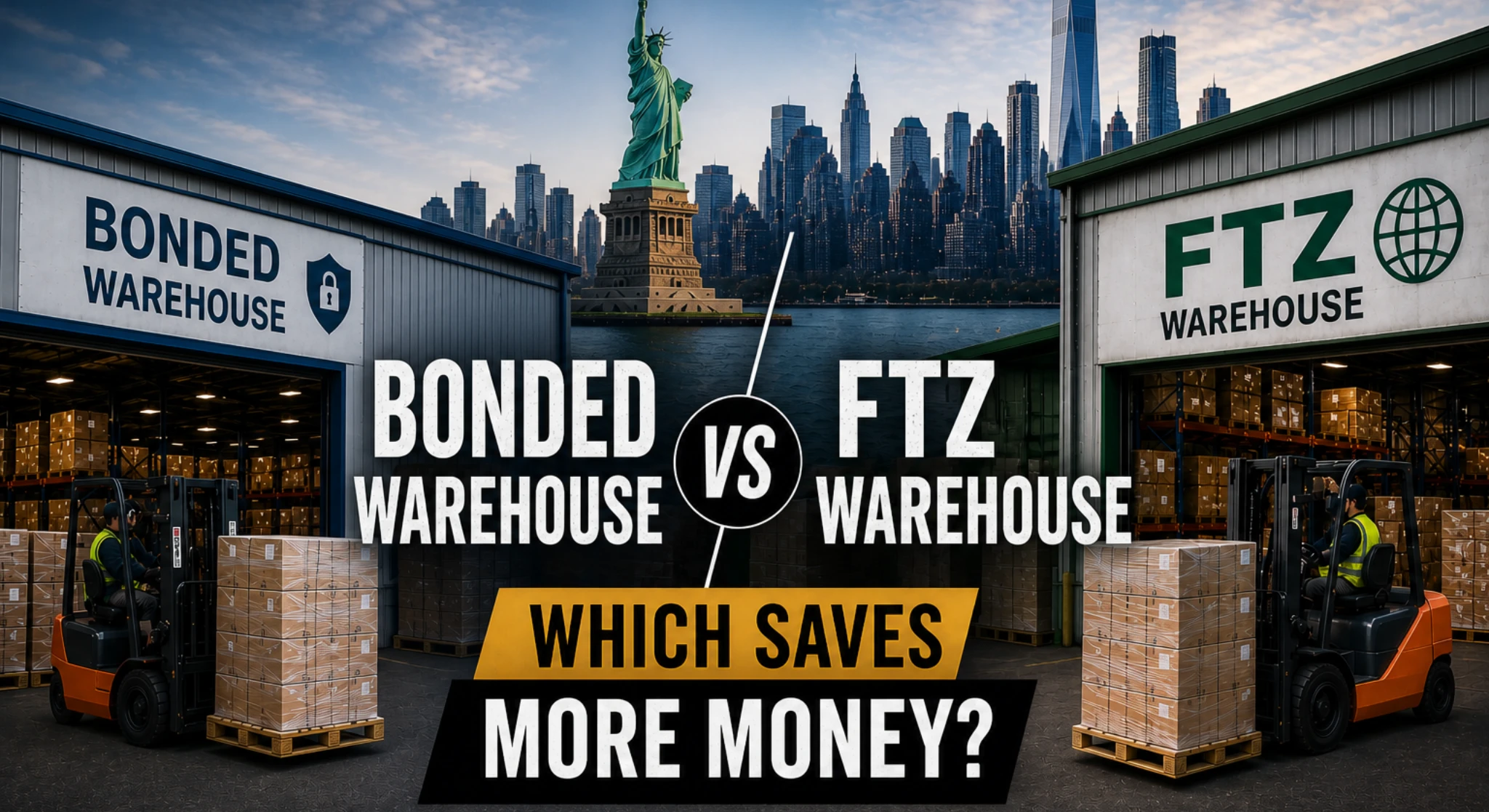
Two common options are bonded warehouses and Foreign Trade Zone (FTZ) warehouses. While both offer advantages, they are not equal when it comes to cost savings.
Understanding the difference can help businesses make better financial decisions.
What Is a Bonded Warehouse?
A bonded warehouse is a secured facility where imported goods can be stored without immediately paying duties.
Duties are paid only when the goods leave the warehouse and enter U.S. commerce.
This can help delay costs and improve short-term cash flow, especially for businesses moving inventory quickly.
However, bonded warehouses primarily offer timing benefits, not long-term cost reduction.
What Is an FTZ Warehouse?
A Foreign Trade Zone warehouse operates differently.
Goods stored in an FTZ are not considered officially entered into U.S. commerce until they leave the zone.
This allows businesses to:
- Delay duty payments
- Reduce duties depending on how goods are handled
- Avoid duties entirely if goods are re-exported
For companies with consistent import activity, this creates more flexibility and potential cost savings.
How They Compare in Real Operations
The difference between bonded and FTZ warehousing becomes clearer when looking at how businesses actually operate.
Bonded warehouses work well when:
- Inventory moves quickly
- Import volumes are lower
- Storage is short-term
FTZ warehouses are often more effective when:
- Inventory is held for longer periods
- Import volumes are consistent or growing
- Goods are distributed regionally or internationally
- Businesses want more control over timing and costs
Where the Cost Difference Comes From
The key difference is not just when duties are paid, but how much is ultimately paid.
With bonded warehousing, duties are delayed but still paid in full once goods enter the market.
With FTZ warehousing, businesses may:
- Reduce total duty exposure
- Avoid duties on exported goods
- Improve cash flow by controlling timing more precisely
Over time, these differences can add up, especially for companies managing larger inventories.
Which Option Saves More Money?
For many growing businesses, FTZ warehousing can help reduce import costs over time, especially when managing consistent inventory and distribution.
Bonded warehouses can still be useful for simpler operations or short-term needs.
But for companies focused on scaling, improving margins, or optimizing logistics, FTZ warehousing typically offers more financial flexibility.
Why This Matters for New York Businesses
Businesses operating in and around New York face additional pressure from high demand, fast-moving inventory, and regional distribution needs.
Serving areas such as:
- New York City
- Long Island
- New Jersey
- Connecticut
- Pennsylvania
often requires a warehouse strategy that balances cost control with efficient delivery.
In these cases, FTZ warehousing can provide both financial and operational advantages.
How to Choose the Right Approach
The right choice depends on how your business operates.
If your focus is short-term storage with fast inventory turnover, bonded warehousing may be enough.
If you are managing ongoing imports, larger inventory volumes, or regional distribution, FTZ warehousing often provides stronger long-term savings and flexibility.
Choosing the Right Warehouse Partner
Regardless of the structure, the warehouse provider plays a critical role.
Look for a partner that offers:
- Secure storage
- Inventory management
- Distribution support
- Regional logistics access
- Experience with FTZ processes
- Flexible warehousing solutions
Working with a provider that offers reliable warehousing and distribution support can make a measurable difference in both cost control and delivery efficiency.
How Triple Crown Warehouse Supports Growing Businesses
Triple Crown Warehouse provides warehousing, distribution, and Foreign Trade Zone support for businesses operating in the New York market.
For companies looking to improve efficiency, reduce unnecessary costs, and scale operations, the right warehouse strategy can make a measurable difference.
Final Thought
Warehouse decisions are not just operational. They are financial decisions.
Choosing between bonded and FTZ warehousing can impact how much you pay, when you pay it, and how efficiently your business runs.
Taking the time to evaluate the right setup can lead to stronger margins and better long-term performance.
Need Help With Warehousing in New York?
👉 Speak with our team to map out the most efficient warehouse strategy for your business.