If you import goods into the United States, you already know how quickly costs can add up — duties, fees, storage charges, and compliance headaches all eat into your margins. A foreign trade zone warehouse can change that equation significantly. Yet many importers and supply chain managers still haven’t tapped into this powerful tool.
This guide breaks down exactly what FTZ warehousing is, how it works in plain terms, and — most importantly — five concrete ways it can make your supply chain leaner, faster, and more cost-efficient.
What Is a Foreign Trade Zone Warehouse?
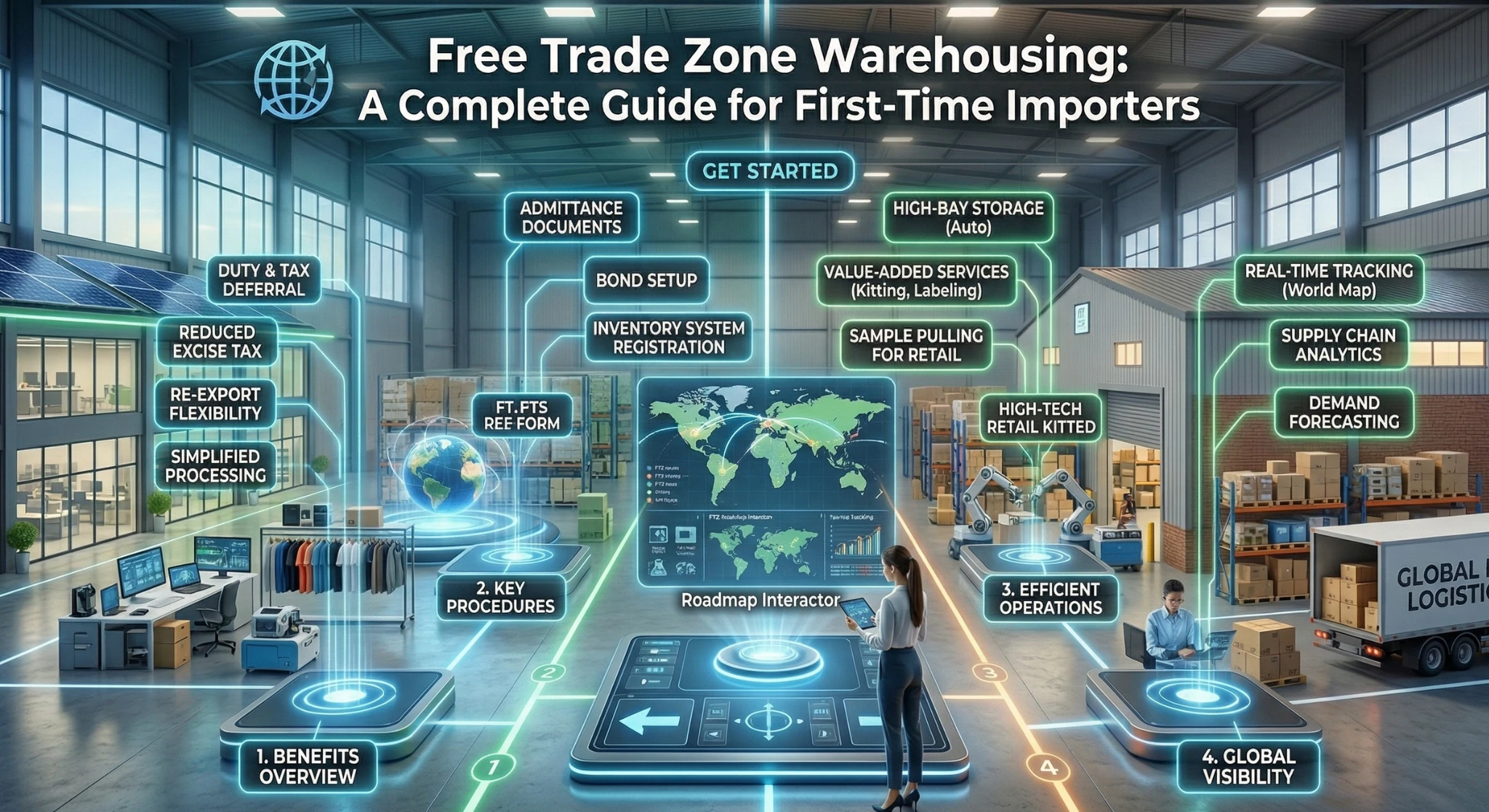
A foreign trade zone (FTZ) is a designated area within the United States that, for customs purposes, is treated as if it exists outside U.S. commerce. Goods can be brought into an FTZ, stored, assembled, repackaged, or manufactured — and duties are only paid when (and if) the goods formally enter the U.S. market.
The U.S. Customs and Border Protection (CBP) authorizes and oversees FTZ operations nationwide. There are currently over 260 FTZ sites across the country, making it easier than ever for importers to access these benefits.
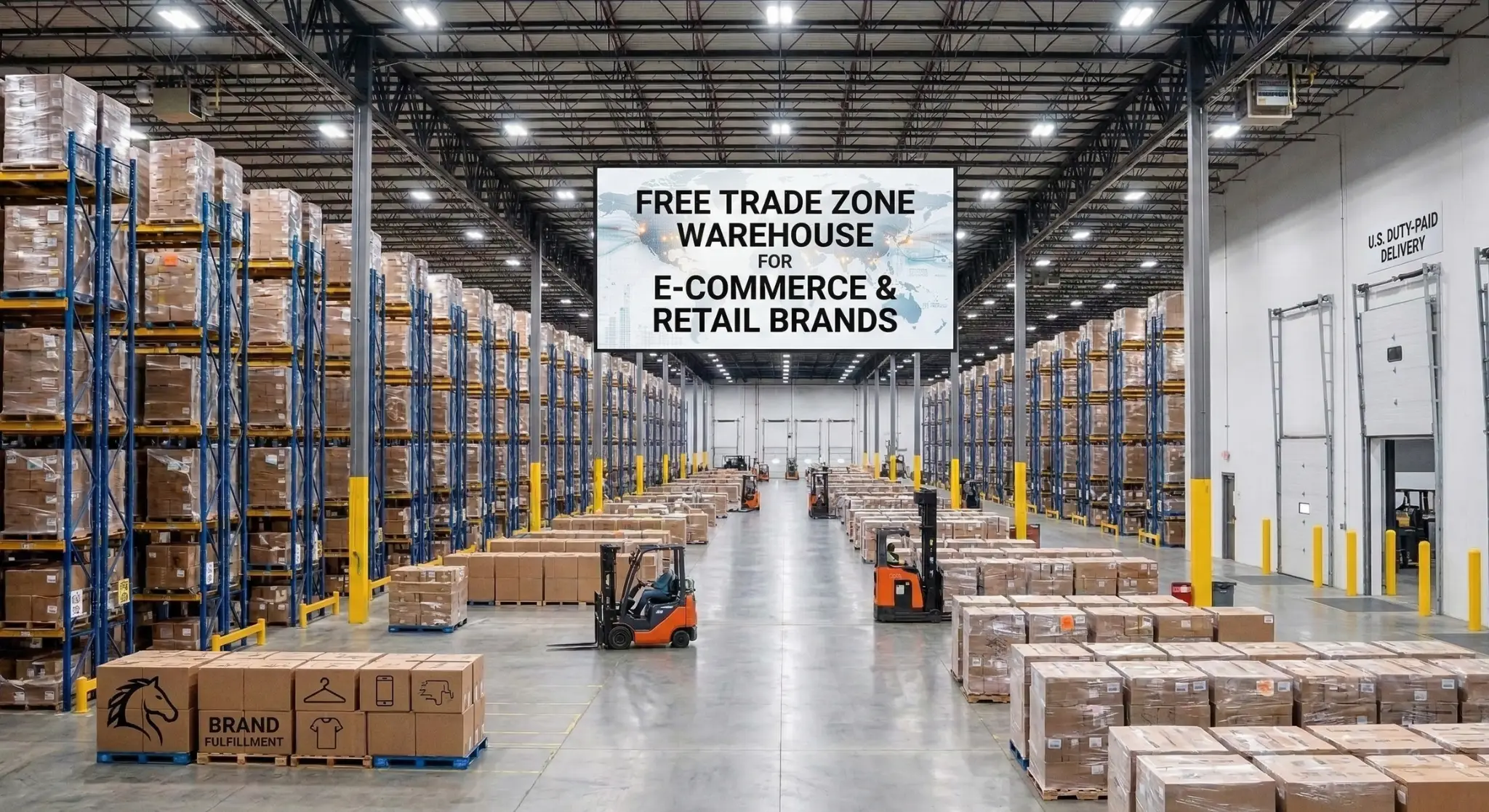
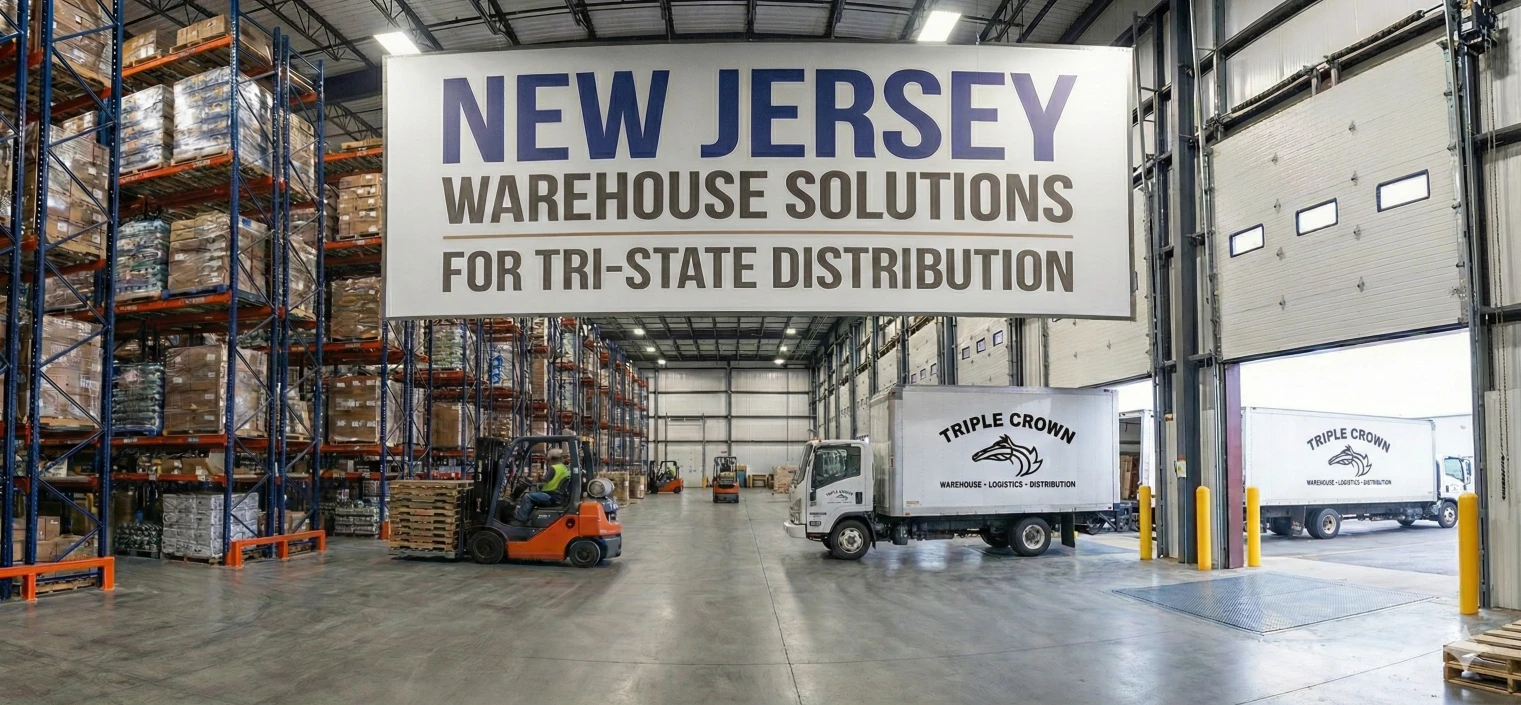
A foreign trade zone warehouse is simply a licensed facility operating inside one of these zones. When you store your goods there, you gain access to a range of duty and cash flow advantages that a standard bonded warehouse simply can’t match. At Triple Crown Warehouse, our FTZ-compliant facility in Hauppauge, New York is designed specifically to help importers take full advantage of these benefits.
Why FTZ Warehousing Matters Right Now
Global supply chains have faced enormous pressure in recent years — from shipping delays and rising freight costs to shifting tariff policies. In this environment, every dollar saved on duties and every day shaved off your customs clearance timeline adds real competitive value.
According to the National Association of Foreign-Trade Zones (NAFTZ), FTZ users collectively save hundreds of millions of dollars annually through duty deferral, reduction, and elimination. These are not small numbers, and they’re available to businesses of all sizes — not just major corporations.
Let’s look at exactly how ftz warehousing delivers those advantages.
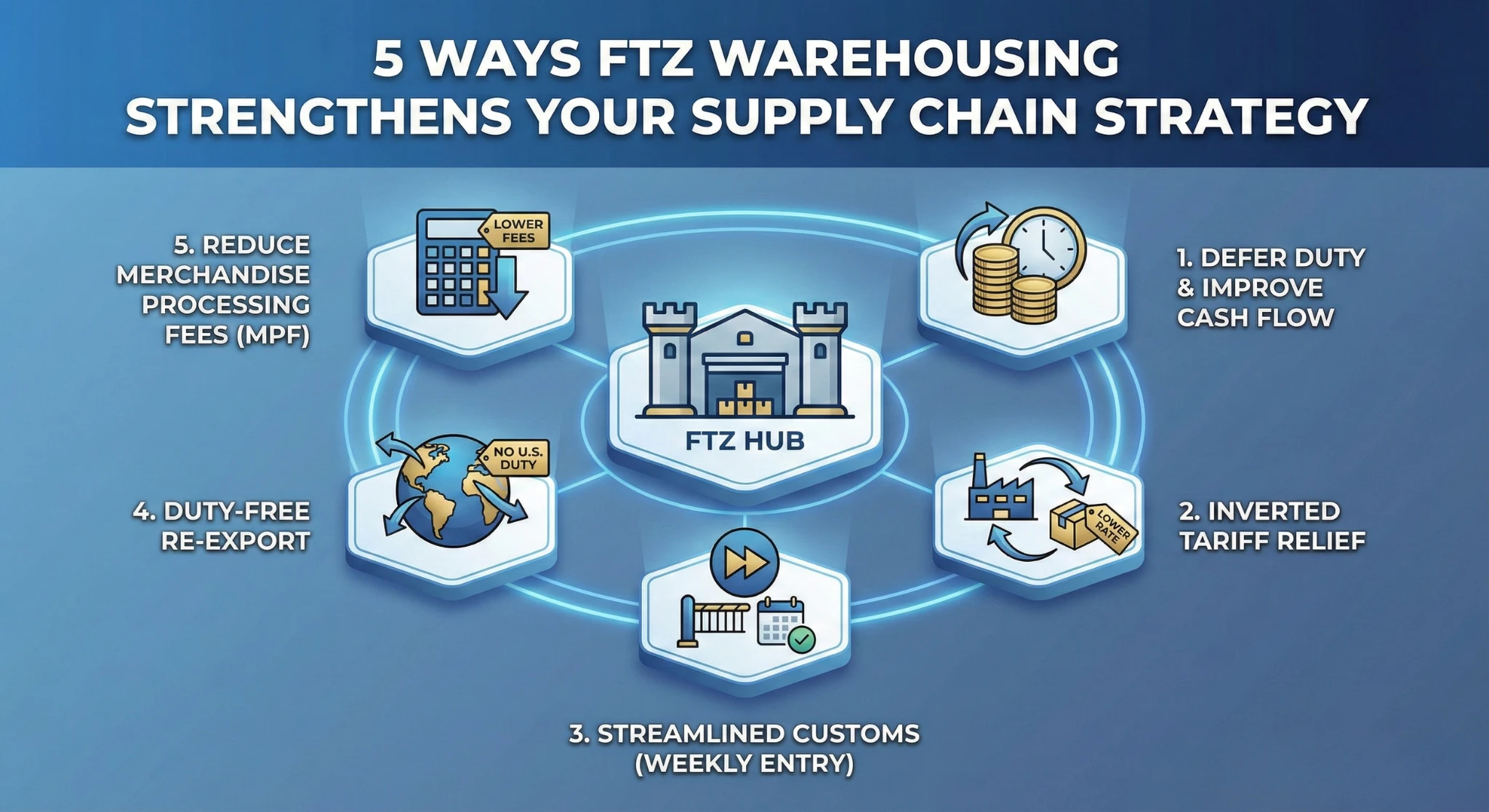
1. Defer Duty Payments and Improve Cash Flow
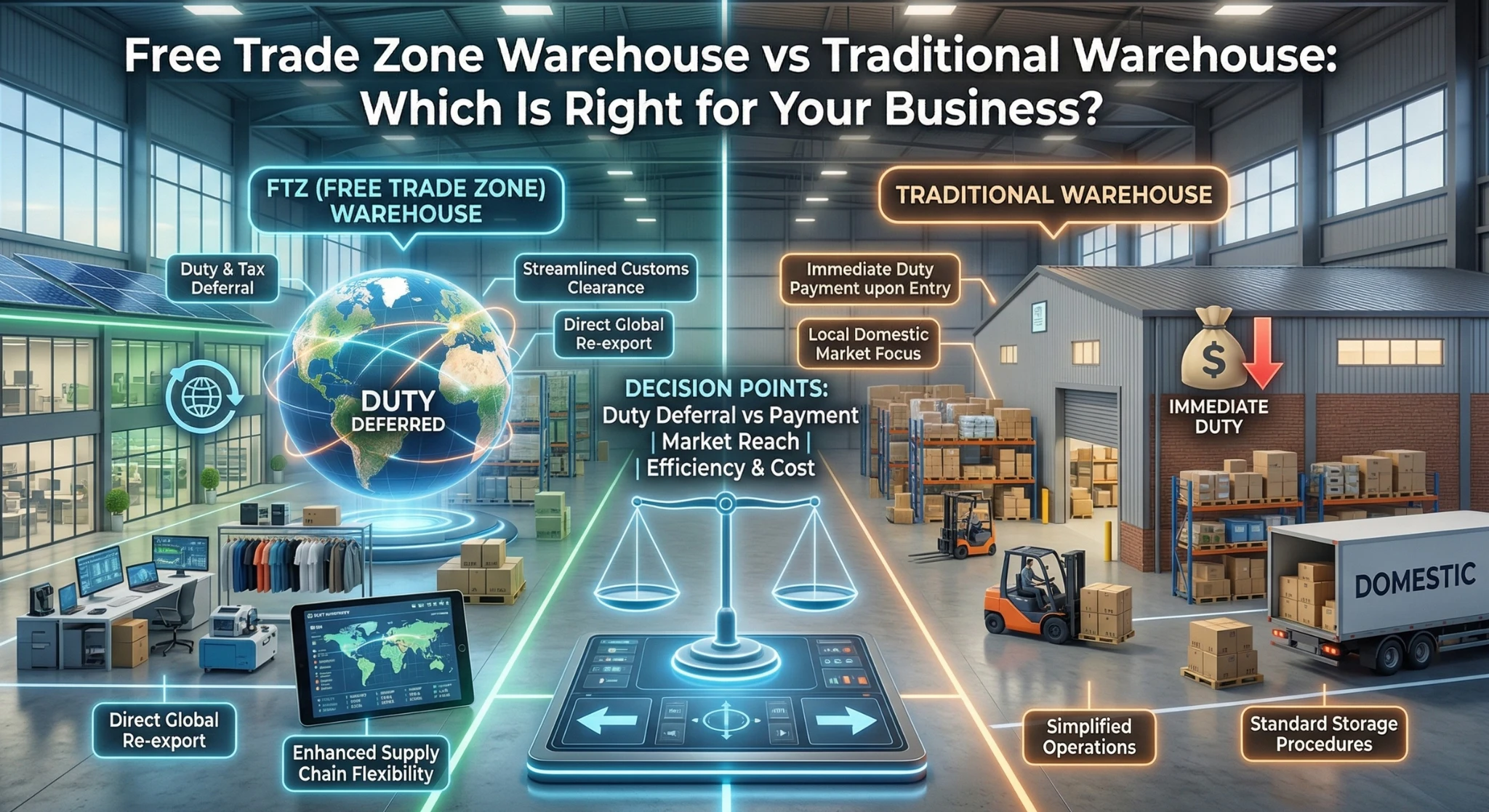
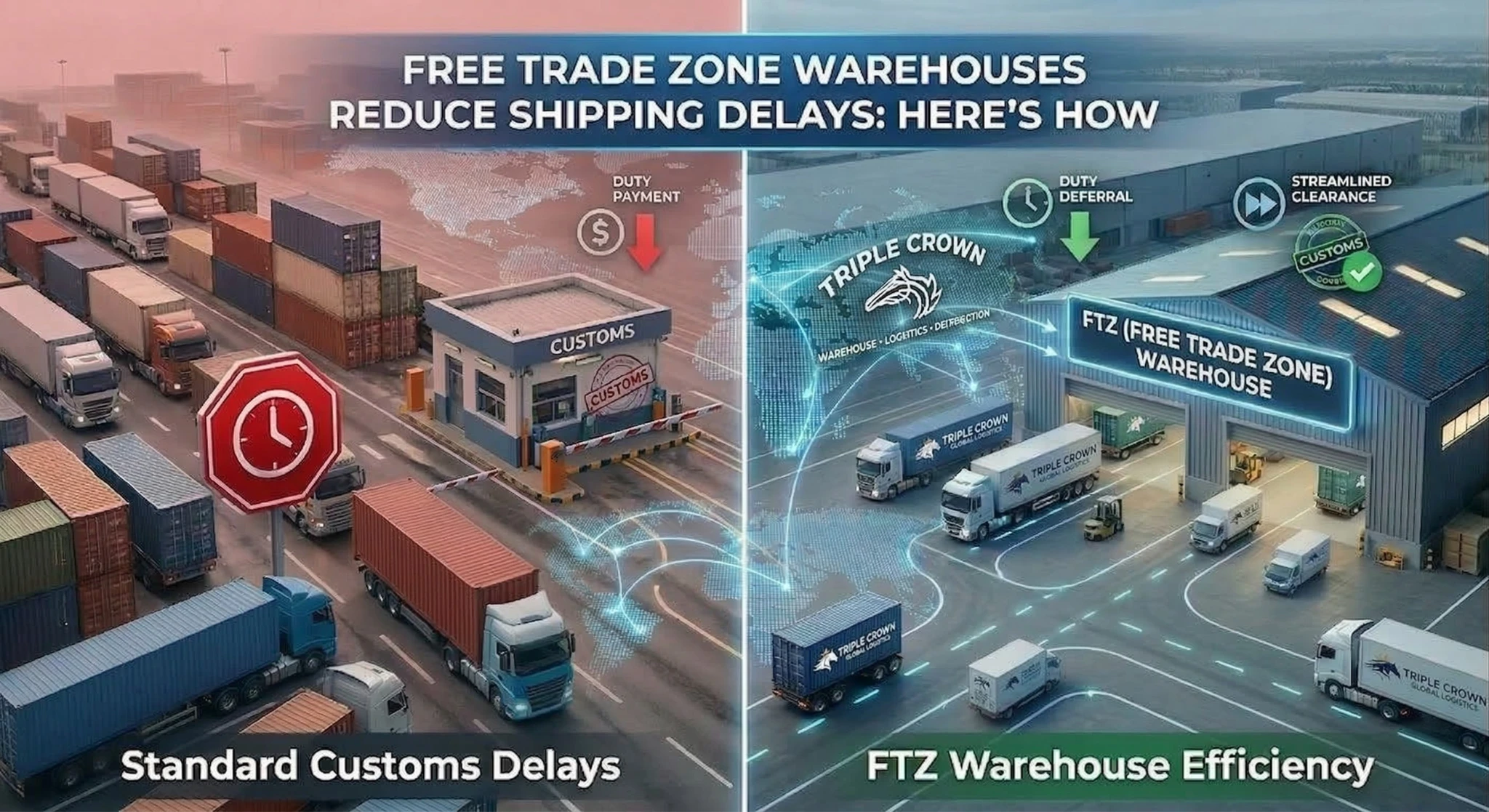
One of the most immediate and tangible benefits of using a foreign trade zone warehouse is duty deferral. When your goods arrive at a standard U.S. port of entry, you typically owe customs duties right away — even if the goods will sit in storage for weeks or months before they’re sold or used.
Inside an FTZ, that changes. You don’t pay duties until your goods officially enter U.S. commerce, which usually means when they ship out to a domestic customer. If your products sit in the zone for 90 days before moving, that’s 90 days of interest-free float on your duty payments.
For importers dealing with large volumes or seasonal inventory, this can free up significant working capital. You’re essentially financing your duty costs interest-free for the duration your goods stay in the zone. This is one of the core reasons importers work with a dedicated crown warehouse like Triple Crown — to turn that deferred cash into operational flexibility.
2. Reduce or Eliminate Duties Through Inverted Tariff Relief
Here’s a benefit that surprises many importers: in some cases, you can actually reduce the duty rate you pay — or eliminate it entirely — through what’s called “inverted tariff” relief.
This happens when the duty rate on a finished product is lower than the rate on the imported components used to make it. In a standard warehouse, you’d pay the higher component duty when the parts enter the country. In an FTZ, you can choose to pay the lower finished-product duty rate instead, even if assembly happened inside the zone.
The National Association of Foreign-Trade Zones notes this is one of the most valuable and underused FTZ benefits available to manufacturers and light assemblers. If your supply chain involves any kind of value-added processing — even simple repackaging or kitting — it’s worth evaluating whether you qualify.
3. Streamline Customs Clearance With Weekly Entry
Managing customs paperwork is one of the most time-consuming parts of importing. Every shipment normally requires a separate entry filing with CBP, which takes time and money.
FTZ operators are permitted to use something called weekly entry — meaning instead of filing a separate customs entry for every individual shipment, you can file a single consolidated entry covering all goods admitted to the zone during that week. This reduces the number of customs filings you need, cuts brokerage fees, and speeds up the overall process.
For high-volume importers receiving multiple shipments weekly, this alone can represent meaningful savings on customs broker costs and administrative time. It also reduces the risk of filing errors that can trigger delays or fines.
At Triple Crown Warehouse, our team is experienced in navigating the documentation requirements that make weekly entry work smoothly for our clients.
4. Avoid Duties on Goods That Never Enter U.S. Commerce
This benefit is particularly valuable for exporters or businesses with international distribution networks. If goods enter your foreign trade zone warehouse and are later re-exported to customers overseas — rather than entering U.S. domestic commerce — you owe zero U.S. customs duties on them.
Think about what this means in practice. You can use an FTZ facility as a hub for global distribution, receiving goods, processing or repackaging them, and shipping them internationally — all without incurring U.S. import duties. The goods technically never “entered” the U.S. market, so no duty applies.
This is a strategy used by multinational manufacturers and distributors who want to consolidate their logistics at a single, well-located facility. A well-positioned ftz warehousing facility near major East Coast ports — like Triple Crown’s location in Hauppauge, New York — puts you close to major import/export gateways while giving you this critical cost advantage.
If you want to understand how this plays out for New York-area importers specifically, our detailed breakdown on how FTZ warehousing cuts costs for importers in New York walks through real-world scenarios.
5. Reduce Merchandise Processing Fees (MPF)
Every formal customs entry into the U.S. triggers a Merchandise Processing Fee (MPF), currently calculated as a percentage of the value of the goods, subject to minimum and maximum thresholds. For businesses filing dozens of entries per month, these fees add up fast.
By consolidating shipments under weekly entry and reducing the total number of CBP filings, FTZ users can significantly reduce their cumulative MPF exposure. In some high-volume scenarios, this single benefit can justify the cost of using a foreign trade zone warehouse entirely on its own.
The U.S. International Trade Commission’s Harmonized Tariff Schedule governs the specific rates that apply to your goods — a qualified customs broker can help you model the MPF savings you’d achieve under FTZ status versus standard entry.
Is FTZ Warehousing Right for Your Business?
FTZ warehousing isn’t a one-size-fits-all solution, but it’s a strong fit for businesses that:
- Import regularly and hold inventory for more than a few weeks before selling domestically
- Deal with complex products involving multiple components with varying duty rates
- Export a portion of their imported goods internationally
- Want to simplify customs compliance and reduce broker fees
- Need flexible, scalable warehousing close to major East Coast ports
If any of these describe your operation, it’s worth having a conversation. The savings available through ftz warehousing — duty deferral, inverted tariff relief, reduced MPF, and re-export duty elimination — can collectively represent a substantial reduction in landed costs.
Why Triple Crown Warehouse for Your FTZ Storage Needs
Triple Crown Warehouse has spent over 35 years building a reputation for reliable, professional logistics in the New York area. Our FTZ-compliant facility in Hauppauge, NY is purpose-built to serve importers who need more than just storage — they need a strategic logistics partner who understands customs compliance, documentation, and supply chain efficiency.
Our team works closely with customs brokers and freight forwarders to make sure your FTZ operation runs smoothly from day one. We handle the warehousing and distribution side so you can focus on running your business.
Explore our full FTZ Warehousing & Distribution services to learn more about what we offer — or call us directly at (631) 348-4994 to discuss your specific needs. We’re ready to help you build a supply chain strategy that actually saves you money.
The Bottom Line
A foreign trade zone warehouse is one of the most underutilized tools in the importer’s toolkit. Duty deferral, inverted tariff savings, reduced customs filings, duty-free re-export, and lower merchandise processing fees are all legitimate, legal advantages that can strengthen your supply chain from the ground up.
The businesses that use ftz warehousing effectively aren’t taking shortcuts — they’re using a government-sanctioned program specifically designed to keep U.S. commerce competitive. If your competitors are already using it and you’re not, it’s time to take a closer look.
Triple Crown Warehouse is here to help you get started. Contact us today to take the first step.